Enjoy free shipping within the USA on purchases over $500 USD! • Ask for your educator discount at may@lungtrainers.com
🔥 CYBER MONDAY IS HERE‼️BUY 2 IBAs OR MORE AND SAVE 25% – THE DISCOUNT IS AUTOMATICALLY APPLIED WHEN YOU PAY FOR YOUR PURCHASE.
Enjoy free shipping within the USA on purchases over $500 USD! • Ask for your educator discount at may@lungtrainers.com
🔥 CYBER MONDAY IS HERE‼️BUY 2 IBAs OR MORE AND SAVE 25% – THE DISCOUNT IS AUTOMATICALLY APPLIED WHEN YOU PAY FOR YOUR PURCHASE.
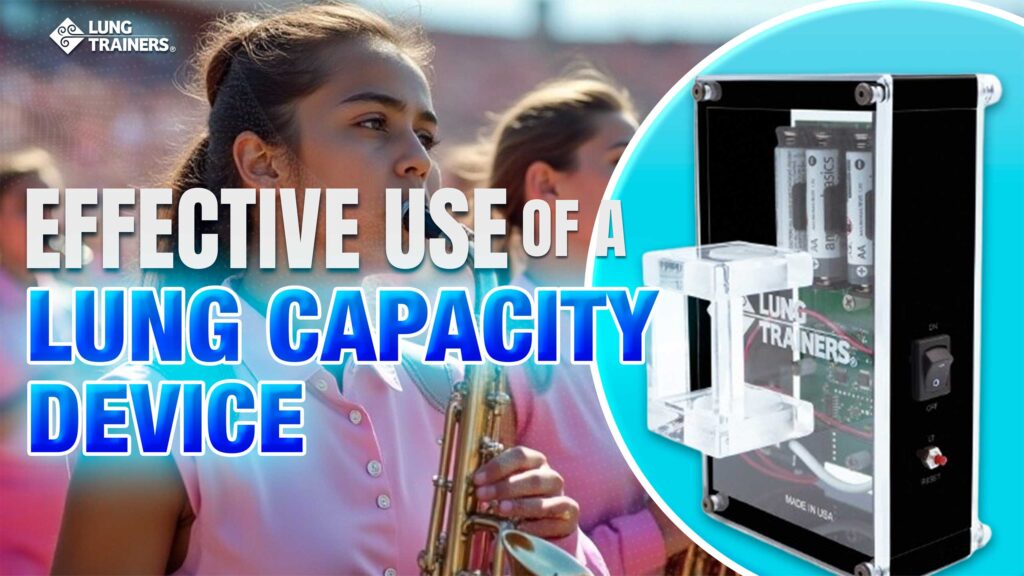
After surgery or during recovery from a lung infection like pneumonia, your doctor may recommend using a lung capacity machine. This device, often referred to as an incentive spirometer, helps maintain healthy lungs by encouraging deeper, more effective breathing. By using this breathing trainer device, you can keep your airways clear and prevent complications during recovery. Let’s explore how to maximize your lung capacity with this powerful tool.
An incentive spirometer is a small lung capacity trainer designed to monitor the volume of your breath. It aids in lung recovery after surgery or illness by keeping the lungs active and free from fluid buildup. When you breathe into the device, a piston rises to measure your air volume. A healthcare provider can set a target volume for you to reach during practice. These devices are frequently used in hospitals post-surgery or for extended bed rest but can also be prescribed for home use.
Using a lung capacity machine offers several benefits, including:
A lung training device can help individuals in various situations, such as:
Follow these steps for optimal results with your lung training equipment:
Step 1: In a chair or bed, sit up straight. Maintain eye level with the incentive spirometer. Hug or hold a pillow to assist with a splint or brace your wound (surgical cut) while using the Lung Capacity Machine if you have surgery on your chest or abdomen (belly). This will aid in the reduction of discomfort at the site of your incision.
Step 2: Put the mouthpiece in your mouth with your lips tightly closed around it. Breathe out entirely (exhale) slowly.
Step 3: Take a deep breath in (inhale) gradually through your mouth. The piston will rise inside the huge column as you take a breath. As the piston rises, the right-hand indicator should rise with it. It must remain between the two arrows.
Step 4: Keep the indicator between the arrows and try to get the piston as high as possible. You’re either breathing too rapidly or too slowly if the indicator doesn’t stay between the arrows.
Step 5: Retain your breath for 10 seconds, or as long as you can, once you’ve gotten it as high as you can. The piston will gently descend to the bottom of the spirometer while you hold your breath.
Step 6: Exhale slowly through your lips once the piston hits the bottom of the Lung Capacity Machine. Take a few moments to relax.
Step 7: Rep 10 times more. With each breath, try to keep the piston at the same level.
Step 8: Try to cough after each round of ten breaths, if necessary, while holding a cushion over your incision. Coughing will aid in the loosening or removal of any mucus in your lungs.
Step 9: On your Lung Capacity Machine, place the marker at the level where the piston reached. Next time, you’ll set this as your aim.
In addition to using the breathing exercise device, incorporate relaxed breathing techniques throughout the day:
If you’re looking for high-quality breathing exercises equipment, the Lung Trainers team is here to help. Their innovative devices are designed to meet various needs, whether you’re recovering from surgery, managing a chronic condition, or simply looking to improve your lung health. The LungTrainer, engineered by Bill Rose and Frank Acosta, combines air pressure and airflow technology to create customized breathing exercises. With its digital display, you can monitor exhalation time, pressure, repetitions, and rest intervals for precise results.
Incorporate a lung capacity machine into your routine to strengthen your respiratory health. For expert guidance, contact Lung Trainers at info@lungtrainers.com or call 786-286-4744. Visit their office at 8000 NW 7 St, Suite 202, Miami, FL 33126, to learn more about their innovative devices. Take the first step toward better lung health today!
Lung Trainers
We firmly believe that the internet should be available and accessible to anyone, and are committed to providing a website that is accessible to the widest possible audience, regardless of circumstance and ability.
To fulfill this, we aim to adhere as strictly as possible to the World Wide Web Consortium’s (W3C) Web Content Accessibility Guidelines 2.1 (WCAG 2.1) at the AA level. These guidelines explain how to make web content accessible to people with a wide array of disabilities. Complying with those guidelines helps us ensure that the website is accessible to all people: blind people, people with motor impairments, visual impairment, cognitive disabilities, and more.
This website utilizes various technologies that are meant to make it as accessible as possible at all times. We utilize an accessibility interface that allows persons with specific disabilities to adjust the website’s UI (user interface) and design it to their personal needs.
Additionally, the website utilizes an AI-based application that runs in the background and optimizes its accessibility level constantly. This application remediates the website’s HTML, adapts Its functionality and behavior for screen-readers used by the blind users, and for keyboard functions used by individuals with motor impairments.
If you’ve found a malfunction or have ideas for improvement, we’ll be happy to hear from you. You can reach out to the website’s operators by using the following email info@lungtrainers.com
Our website implements the ARIA attributes (Accessible Rich Internet Applications) technique, alongside various different behavioral changes, to ensure blind users visiting with screen-readers are able to read, comprehend, and enjoy the website’s functions. As soon as a user with a screen-reader enters your site, they immediately receive a prompt to enter the Screen-Reader Profile so they can browse and operate your site effectively. Here’s how our website covers some of the most important screen-reader requirements, alongside console screenshots of code examples:
Screen-reader optimization: we run a background process that learns the website’s components from top to bottom, to ensure ongoing compliance even when updating the website. In this process, we provide screen-readers with meaningful data using the ARIA set of attributes. For example, we provide accurate form labels; descriptions for actionable icons (social media icons, search icons, cart icons, etc.); validation guidance for form inputs; element roles such as buttons, menus, modal dialogues (popups), and others. Additionally, the background process scans all the website’s images and provides an accurate and meaningful image-object-recognition-based description as an ALT (alternate text) tag for images that are not described. It will also extract texts that are embedded within the image, using an OCR (optical character recognition) technology. To turn on screen-reader adjustments at any time, users need only to press the Alt+1 keyboard combination. Screen-reader users also get automatic announcements to turn the Screen-reader mode on as soon as they enter the website.
These adjustments are compatible with all popular screen readers, including JAWS and NVDA.
Keyboard navigation optimization: The background process also adjusts the website’s HTML, and adds various behaviors using JavaScript code to make the website operable by the keyboard. This includes the ability to navigate the website using the Tab and Shift+Tab keys, operate dropdowns with the arrow keys, close them with Esc, trigger buttons and links using the Enter key, navigate between radio and checkbox elements using the arrow keys, and fill them in with the Spacebar or Enter key.Additionally, keyboard users will find quick-navigation and content-skip menus, available at any time by clicking Alt+1, or as the first elements of the site while navigating with the keyboard. The background process also handles triggered popups by moving the keyboard focus towards them as soon as they appear, and not allow the focus drift outside it.
Users can also use shortcuts such as “M” (menus), “H” (headings), “F” (forms), “B” (buttons), and “G” (graphics) to jump to specific elements.
We aim to support the widest array of browsers and assistive technologies as possible, so our users can choose the best fitting tools for them, with as few limitations as possible. Therefore, we have worked very hard to be able to support all major systems that comprise over 95% of the user market share including Google Chrome, Mozilla Firefox, Apple Safari, Opera and Microsoft Edge, JAWS and NVDA (screen readers).
Despite our very best efforts to allow anybody to adjust the website to their needs. There may still be pages or sections that are not fully accessible, are in the process of becoming accessible, or are lacking an adequate technological solution to make them accessible. Still, we are continually improving our accessibility, adding, updating and improving its options and features, and developing and adopting new technologies. All this is meant to reach the optimal level of accessibility, following technological advancements. For any assistance, please reach out to info@lungtrainers.com
